
Managing a growing small business requires efficient operations, streamlined workflows, and real-time visibility across all departments. Enterprise Resource Planning (ERP) software integrates core business processes—such as accounting, inventory management, customer relations, human resources, and supply chain tracking—into a centralized database.
While ERP systems were historically built for large enterprise corporations, modern cloud technology makes powerful ERP solutions accessible, scalable, and affordable for small and medium-sized enterprises (SMEs).
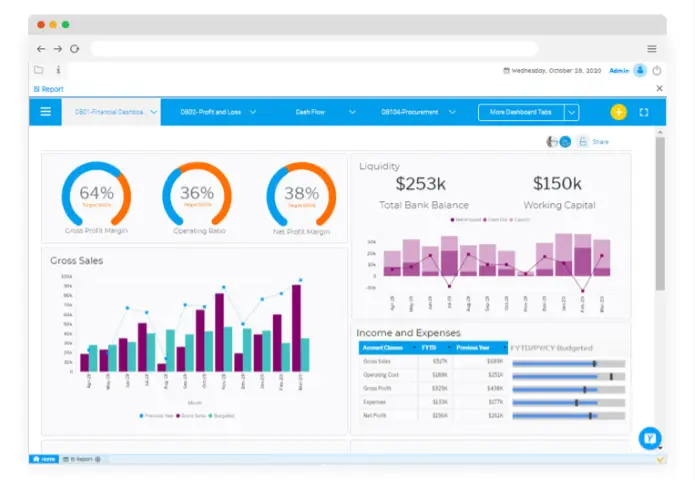
Why Small Businesses Need ERP Software
Small businesses frequently begin by using disconnected software tools: basic accounting software for bookkeeping, separate spreadsheets for inventory, external software for CRM, and manual tracking for payroll. As transaction volumes grow, this fragmented tech stack causes operational bottlenecks, data silos, and administrative errors.
Implementing a unified ERP platform delivers clear operational advantages:
- Centralized Data Management: Eliminates duplicate data entry across departments and ensures a single source of truth for business metrics.
- Automated Business Workflows: Streamlines routine processes such as order fulfillment, invoice generation, and purchase order approvals.
- Real-Time Financial Reporting: Offers instant visibility into profit margins, cash flow, and operating expenses.
- Improved Inventory Accuracy: Tracks inventory levels, stock reorders, and supply chain logistics continuously across sales channels.
- Scalability: Supports business expansion into multi-entity management, international currencies, or additional product lines without requiring a system redesign.
Core Criteria for Evaluating Small Business ERP Platforms
Selecting the ideal ERP requires balancing feature depth against total cost of ownership and ease of deployment. Small business leaders should evaluate prospective platforms against several core factors:
- Total Cost of Ownership (TCO): Beyond recurring subscription fees per user, consider implementation fees, data migration expenses, customization costs, and ongoing training.
- Implementation Timeline: Cloud-native SaaS ERP platforms feature faster setup times compared to traditional on-premise installations, reducing business downtime.
- Integration Capabilities: Ensure native API connectors exist for your current e-commerce platforms (such as Shopify or WooCommerce), CRM systems, payment gateways, and banking tools.
- User Experience and Adoption: An intuitive dashboard design reduces employee onboarding friction and speeds up organization-wide system adoption.
- Modular Flexibility: Look for platforms that allow you to activate core financial and operational modules initially, then add advanced modules as business demands grow.
Detailed Reviews of the Best Small Business ERP Platforms
1. Oracle NetSuite ERP
Best Overall Cloud ERP for High-Growth Companies
Oracle NetSuite remains a leading cloud ERP solution for fast-growing small and mid-market companies. Built entirely in the cloud, NetSuite integrates financial management, CRM, inventory control, e-commerce, and HR into one cohesive system.
- Key Strengths: NetSuite OneWorld handles multi-currency transactions, tax consolidation, and multi-subsidiary financial reporting. Its customizable role-based dashboards deliver instant visibility tailored to executive, operational, and financial positions.
- Considerations: Licensing costs increase as additional modules and user counts are introduced. Small businesses requiring simple setups may find NetSuite’s configuration capabilities complex.
- Target Audience: Rapidly scaling companies, e-commerce brands, global distributors, and venture-backed startups needing robust financial consolidation.
2. Microsoft Dynamics 365 Business Central
Best for Seamless Integration with Microsoft Ecosystem
Microsoft Dynamics 365 Business Central provides complete operational management specifically designed for SMBs. It integrates directly with Microsoft 365 applications, including Excel, Outlook, Teams, and Power BI.
- Key Strengths: Team members can generate quotes, process purchase orders, and share financial analytics directly within Outlook and Teams. Power Automate and Power Apps integration enables simple custom workflow creation without extensive coding.
- Considerations: Advanced manufacturing or specialized warehouse configurations often require third-party add-ons from the AppSource marketplace.
- Target Audience: Small to mid-sized businesses heavily invested in Microsoft cloud infrastructure and office tools.
3. Odoo ERP
Best Open-Source Modular Solution for Budget-Conscious Teams
Odoo offers a unique open-source ERP framework built on modular applications. Companies can start with a single application (such as invoicing or inventory) and add applications like CRM, manufacturing, or POS as their operations expand.
- Key Strengths: Highly affordable subscription plans make Odoo accessible for small businesses. Its user interface is modern, intuitive, and highly customizable.
- Considerations: Community-supported editions require internal technical expertise, while managed cloud setups can accumulate costs if numerous third-party apps are implemented.
- Target Audience: Small businesses, boutique manufacturers, and startups seeking flexible, affordable modular software.
4. Acumatica Cloud ERP
Best for Consumption-Based Pricing and Flexible User Scaling
Acumatica delivers cloud ERP solutions focused on usability and adaptable pricing models. Unlike most software providers that charge strict per-user monthly licenses, Acumatica uses resource-based pricing that scales based on transactional volume.
- Key Strengths: Unlimited user licensing allows companies to grant platform access to all employees, field staff, and external partners without escalating user fees. It offers strong industry-specific editions tailored for construction, distribution, and manufacturing.
- Considerations: Pricing structures can be harder to estimate upfront without a thorough audit of expected transaction volumes.
- Target Audience: Mid-sized and growing small businesses with broad teams, external collaborators, or transaction-heavy business models.
5. SAP Business One
Best for Established Small Manufacturers and Wholesale Distributors
SAP Business One is an integrated ERP solution created specifically for small businesses with up to 100 users. Available in both cloud and on-premise deployments, it provides deep financial control and operational oversight.
- Key Strengths: Excellent material requirements planning (MRP), production management, bill of materials (BOM) tracking, and inventory control capabilities. Powered by SAP HANA, it provides fast reporting and real-time operational analytics.
- Considerations: User interface elements feel more traditional compared to newer SaaS competitors, and initial setup typically requires certified implementation partners.
- Target Audience: Small manufacturing operations, wholesale trade distributors, and product-based companies.
Step-by-Step Implementation Roadmap for Small Businesses
Implementing an ERP platform demands careful planning, stakeholder alignment, and methodical execution. Following a structured project lifecycle prevents project delays and budget overruns.
- Phase 1: Needs Analysis & Process Mapping: Identify core operational pain points, document current workflows, and establish non-negotiable software requirements across department leads.
- Phase 2: Vendor Selection & Demonstration: Request customized product demonstrations using real company data scenarios rather than standardized vendor sales scripts.
- Phase 3: Data Cleansing & Migration: Audit legacy databases, standardize product SKUs, eliminate duplicate customer profiles, and verify ledger balances before importing data into the new system.
- Phase 4: Pilot Testing & User Training: Run parallel testing environments to validate order flows, financial reporting, and system performance while conducting role-specific employee training sessions.
- Phase 5: Deployment & Post-Go-Live Support: Execute system cutover during off-peak operational hours and maintain dedicated technical support during initial month-end close cycles.
Key Mistakes to Avoid During ERP Selection
- Over-Customizing standard Workflows: Forcing an ERP platform to mirror inefficient legacy processes creates unnecessary custom code that complicates future system updates. Adapt business operations to vendor best practices whenever possible.
- Underestimating Change Management: Software adoption fails primarily due to user resistance. Invest early in thorough employee training, clear documentation, and user support channels.
- Focusing Exclusively on Initial License Costs: Evaluate the total cost over a five-year lifecycle, including implementation partner fees, custom integrations, ongoing maintenance, and module upgrades.
- Neglecting Mobile and Remote Functionality: Ensure your selected ERP offers robust mobile applications for warehouse teams, field sales, and remote executives who need real-time data access.
Final Recommendation: Making the Right Choice
Selecting the best ERP software depends directly on your business model, growth objectives, and operational complexity:
- Choose Oracle NetSuite if you are a fast-scaling company preparing for rapid expansion or global multi-entity operations.
- Choose Microsoft Dynamics 365 Business Central if your team heavily relies on Microsoft tools and seeks deep productivity integration.
- Choose Odoo if you require a modular, budget-friendly entry point that grows alongside your business requirements.
- Choose Acumatica if you want consumption-based pricing that empowers your entire workforce with platform access.
- Choose SAP Business One if your small business focuses on discrete manufacturing, complex inventory management, or wholesale distribution.
By carefully assessing your core business needs today and anticipating operational requirements three to five years ahead, your organization can implement an ERP system that drives efficiency, profitability, and sustainable growth.