
Enterprise Resource Planning (ERP) systems were once considered an exclusive luxury for Fortune 500 companies with massive IT budgets and dedicated server rooms. Today, they form the backbone of competitive modern businesses of all sizes. However, one of the most common and costly mistakes growing organizations make is selecting a platform that does not match their current maturity level or future expansion goals.
Adopting a system that is too simple can choke your operations with manual workarounds, spreadsheets, and data silos. On the flip side, implementing an enterprise-grade platform too early can drain financial resources, overwhelm your team with unnecessary complexity, and slow down decision-making.
To maximize operational efficiency and maintain high profit margins, you must align your software infrastructure directly with your business evolution. This guide breaks down how to select, implement, and scale the right platform at every stage of your growth trajectory.
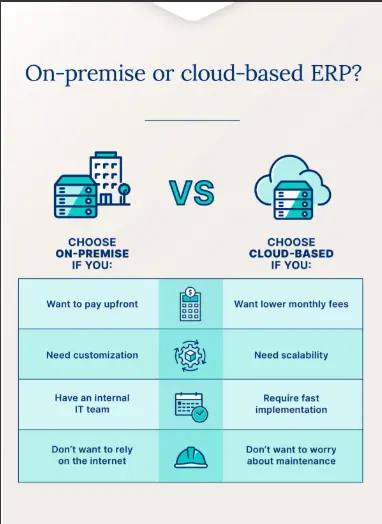
Cloud vs On-Premise ERP Models. Sumber: Cin7
Phase 1: Early-Stage Growth (Foundation and Speed)
In the startup and early-growth phase, speed, agility, and cash preservation are paramount. At this stage, companies typically rely on standalone entry-level software, such as basic cloud accounting tools, simple inventory trackers, and individual messaging apps.
While this setup works well when transaction volumes are low, growth quickly introduces operational friction. You might notice your finance team spending days reconciling sales data across disconnected platforms, or warehouse staff misplacing stock due to manual inventory updates.
Recognizing the Trigger Points You have outgrown your foundational tools when:
- Closing monthly financial books takes longer than five to seven business days.
- Customer service issues arise frequently due to inaccurate inventory levels.
- Employees spend significant hours copying and pasting data between systems.
- Decision-makers lack real-time visibility into weekly cash flow.
The Ideal ERP Solution At this entry stage, full-scale enterprise software is unnecessary. The goal is to deploy lightweight, cloud-native solutions or entry-level unified platforms. These modern entry-level tools consolidate core functions—such as basic accounting, order management, invoicing, and purchasing—into a single digital ecosystem.
Key requirements for this stage include low upfront capital expenditure, rapid implementation timelines (ideally under two months), and minimal ongoing maintenance requirements. Subscription-based Software-as-a-Service (SaaS) models are ideal because they convert heavy infrastructure costs into predictable operational expenses.
Phase 2: Mid-Market Expansion (Scale and Standardized Processes)
As your business moves into mid-market territory, your team size grows, operational workflows become multi-layered, and product lines expand. You might open additional warehouses, start selling across multiple online and physical channels, or expand service territories.
At this inflection point, basic entry-level accounting software becomes a major bottleneck. The challenge shifts from merely recording transactions to streamlining complex workflows, ensuring regulatory compliance, and establishing cross-departmental accountability.
Recognizing the Trigger Points Mid-market growth signals the need for a true ERP platform when:
- Department heads manage their operations through separate, non-communicating software tools.
- Managing multi-currency transactions, tax variances, or multi-location inventory creates frequent errors.
- Demand forecasting relies largely on guesswork rather than integrated historic data.
- Compliance and auditing requirements become too demanding for basic accounting records.
The Ideal ERP Solution Mid-market organizations require a modular Cloud ERP platform. A modular approach allows you to implement core operational modules first—such as advanced financial management, Customer Relationship Management (CRM), Supply Chain Management (SCM), and Human Capital Management (HCM)—and add specialized features as your operations diversify.
Key capabilities to prioritize at this stage include:
- Automated Workflow Routing: Streamlining purchase approvals, invoice matching, and order fulfillment pathways without human intervention.
- Integrated Business Intelligence: Providing customized dashboards for department heads to track real-time Key Performance Indicators (KPIs).
- Robust API Infrastructure: Enabling seamless connections to third-party applications, such as specialized e-commerce platforms, logistics providers, and payment gateways.
Phase 3: Mature and Global Enterprise (Optimization and Transformation)
When an organization reaches enterprise maturity, operations often span multiple legal entities, diverse international markets, complex supply chains, and hundreds or thousands of employees.
At this tier, business goals pivot from rapid expansion to process optimization, risk mitigation, global governance, and market responsiveness. An out-of-the-box system can no longer support the intricate requirements of enterprise operations.
Recognizing the Trigger Points Enterprise-grade systems become mandatory when:
- Operating across multiple international subsidiaries requires consolidated financial reporting in real time across different currencies and tax jurisdictions.
- Supply chain visibility must extend globally to manage raw material sourcing, production schedules, and distributed logistics.
- Strict corporate governance, internal controls, and data security standards must be enforced globally.
- Mergers and acquisitions require rapid onboarding and integration of new business entities.
The Ideal ERP Solution Enterprise-tier platforms offer deep customization, massive data processing power, and extensive industry-specific functionalities—such as advanced manufacturing resource planning or global trade compliance management.
Modern enterprise systems increasingly incorporate Artificial Intelligence (AI) and Machine Learning (ML) directly into their core frameworks. These intelligent platforms analyze massive datasets to predict supply chain disruptions, optimize inventory reorder points, automate complex financial reconciliations, and personalize customer interactions at scale.
At this level, deployment architecture also becomes a strategic decision. While many enterprise organizations favor multi-tenant cloud environments for agility, others choose hybrid models to maintain strict regulatory compliance or protect proprietary on-premise technology stacks.
Evaluating ERP Options: Strategic Selection Framework
Selecting a platform requires balancing operational capabilities against long-term business goals. To ensure your investment delivers high performance, use this structured framework during your evaluation process:
1. Total Cost of Ownership (TCO) vs. Value Creation Look beyond upfront software licensing or subscription fees. Calculate implementation costs, customization requirements, user training, continuous software updates, and internal IT support overhead. A lower initial price tag often masks high long-term maintenance costs if the system requires heavy custom coding to function properly.
2. Scalability and Extensibility Evaluate how easily the system scales during peak operational periods. Ask potential vendors how their architecture handles sudden surges in transaction volume, user additions, and database growth without performance degradation. Ensure the platform offers robust APIs and a broad ecosystem of pre-built integrations.
3. User Experience and Organizational Adoption The most advanced system yields minimal ROI if your workforce finds it overly complex or unintuitive. Prioritize platforms that feature clean, modern interfaces, role-based user navigation, mobile accessibility, and embedded learning tools. Fast employee adoption is crucial to realizing software value quickly.
4. Vendor Stability and Product Roadmap Investing in a platform is a long-term strategic partnership that typically lasts seven to ten years. Research the vendor’s financial health, customer retention rates, and research and development investment. Choose vendors that consistently update their product capabilities to keep pace with emerging technological developments.
Executing a Phased Implementation Strategy
Once you identify the system that matches your trajectory, execution determines success. ERP implementations carry inherent risks, but following a structured approach mitigates operational disruption:
Define Clear Objectives and Metrics Establish precise operational targets prior to deployment. Rather than aiming generally to improve efficiency, target specific outcomes such as reducing order-to-cash cycles by 30% or cutting month-end closing timelines from ten days to two days.
Clean and Migrate Data Cautiously Avoid transferring outdated, duplicate, or inaccurate records into your new platform. Dedicate time early in the process to audit, sanitize, and format historical data. High data quality is essential for generating trustworthy analytics and actionable business insights.
Invest Heavily in Change Management Software transitions represent cultural shifts as much as technical upgrades. Communicate the value of the new platform clearly across all organizational levels. Provide tailored, role-specific training sessions and establish internal product champions within each department to support team members through the operational transition.
Adopt an Iterative Deployment Model Instead of attempting a massive, all-at-once transition, consider phased rollouts. Launch core financial and operational modules first, stabilize business operations, and then gradually introduce advanced features like automated procurement, predictive maintenance, or advanced analytics.
Aligning Technology with Long-Term Success
Your ERP strategy should never remain static. As market conditions evolve, consumer preferences shift, and new technologies emerge, your operational software must adapt accordingly.
By matching your platform directly to your current growth stage while leaving room for future expansion, you build a resilient operational foundation. This strategic alignment ensures your technology empowers your teams, protects your margins, and serves as a catalyst for sustainable, long-term growth.